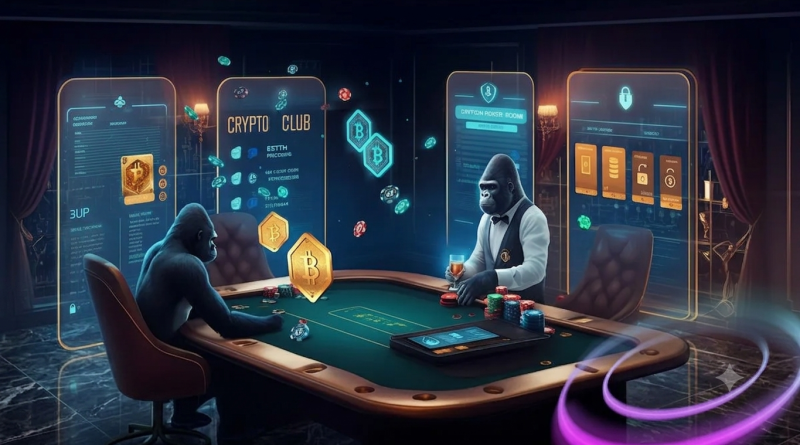
Poker AI Explained: How Bots and Robots Dominate the Tables
Poker AI Explained: How Bots and Robots Dominate the Tables! This is a new era for Poker AI. We see an explosion of it in online rooms and mobile apps which has transformed from the shady backroom poker bots to very professional, state-of-the-art AI poker software which is at the level of the best professionals. What used to be a novelty is now a force which is really shaping the future of poker AI.
The Rise of AI in Online Poker
Picture this: In the WSOP online qualifier you wear yourself out. You’re reading the table like a book, then “whoa”; in comes a rival that doesn’t break a sweat, no tell to give away a thing. That’s when it hits you: you may not be playing a human at all.
The industry too is informed about it. Even WSOP officials have issued public warnings about online poker bots creeping into tournaments and qualifiers. To the average individuals, that implies that the playing field is not only about the bank rolls and the reads, but it has more to do with knowing whether his or her opponent was even a human being.
The issue at hand and the chance. We have developed an AI based fraud prevention which deters bots while at the same time we allow players to use in platform AI tools for their training. What I got out of it is this: Before you jump in, do your research on the rules of this new game.
What Is Poker AI, and How Does It Work?
So just what is poker AI? At it’s core it’s a brain which we programmed to play cards. It uses decision trees, probability engines, and also in recent years has at its disposal hand evaluation AI models which determine the odds in the millisecond it takes to shuffle out the chips.
There are two types of bots. One is the rule-based bot, which operates with the basic rules, such as old school calculators. The second is the neural network bot, which learns from and imitates the pro. It’s like the Tesla autopilot but for poker. It calculates the optimal move in each second of the game but never “feels” it. This is a helpful idea, and it is quite the time saver, due to the fact that if you are aware of it, mind can easily look into other matters of game.
Training modes which hone skills and fraud detection systems that keep the play fair. As a player or platform owner what it means is clarity: you know what to expect and how to prepare.
Types of Poker Bots: From Basic Scripts to Advanced AI
All bots are not the same:
Programmed Bots
They are the most basic automated cheaters with programmed choices, such as to always fold weak off suit hands with first position. These are extremely easy to recognize; it is just playing out of a book.
Advanced Bots
This is an automated crew that utilizes third-party tools, and although it is easy to understand that they have automated their game, they cannot perform well when the game comes up with situations that are not normal.
AI
These are not basic bots that follow simple rules. In Poker, they use machine learning, and can adjust to that which is most applicable to the situation and to the opponent.
The knowledge of all areas is essential. In our platforms we have robot AI players which are for training and simulation only. No fraud, no fakes just skill development.
Key Features of Modern Poker AI Software
Here is what sets basic poker AI bots apart from the top-tier systems:
- Instant hand evaluation: Calculating the odds as you play.
- Opponent modeling: The construction of profiles of your tendencies.
- Multi-table load-balancing: No fatigue, no leaks.
- RTA-style suggestions: A whisper coach providing real-time suggestions.
Look out for these, and you will be in a position to determine whether you are dealing with a script kiddie or a pro-level program.
Why is this important? Access is your key. If you’re designing or running a platform, knowing these features lets you safeguard your games; and if you’re playing, it gives you sharper radar.
Modern platforms integrate RTA controls and optional AI-assist features. That way you have the benefits (skill training, advanced analytics) without the negative (cheating). The actual key? Use AI as a growth tool, not a shortcut.
Hand Evaluation and Real-Time Decision-Making
Imagine this: You’re deep in a Sunday major, staring down an all-in shove. You’ve got pocket tens. Opponent’s range? Murky. What do you do?
A hand evaluation AI doesn’t sweat. It immediately calculates the pot odds, stack sizes, position, and betting patterns; then gives the +EV (expected value) action. That is the strength of AI-enhanced poker training in real-time.
To the players, this is money and skill in one. The quicker you understand these mechanics the less you will be guided by a gut feel and the more you will be able to act with precision.
White-label poker networks build this as optional training modules. That means platform owners can give players an edge in practice modes without risking the integrity of live cash games. You train smarter, then take that confidence to real tables.
If you know how the AI evaluates hands, you don’t just play better, but you think better too.
How AI Poker Bots Analyze Opponents’ Behavior
And here is the critical part: bots do not only play their cards, they learn yours.
Modern poker bots track everything from bet sizing to timing tells. They know that you always C-bet small. When you have medium hands, they read it. They take full advantage of leaks by using pattern recognition.
Others turn exploitative, exploiting weak points directly, while others play GTO (Game Theory Optimal) lines, and become almost unexploitable.
Behavioral fingerprinting and anomaly monitoring are used in advanced fraud detection suites to identify suspicious accounts. The goal? Protect your ecosystem, so human vs. AI poker remains an honest matchup, not a rigged one.
Bottom line: learn how bots analyze behavior; then flip it. Outsmart the machine.
Advantages of Using Poker Robots in Online Play
Let’s be real: poker robots have one superpower; you can’t tilt them. They do not get bored in 10 hours. They do not hit the wrong button pushing kings into aces at three in the morning. A well-coded poker bot AI just keeps grinding, hand after hand, clocking volume at a pace no human can match.
There is a catch, however. Lean on poker robots too much and your instincts dull. You cease to sharpen your reads, stop developing creativity. In the long-run, the advantage goes to the button pusher who has no real skill.
That is why modern platforms set the boundary: AI can be used as a training partner or a simulation bot, but not as an exploitation engine. You can learn, test, and practice strategies without desecrating the integrity of the game.
Poker robots may save you time and money, but the real win comes from learning how to beat them.
Poker AI in Tournaments vs. Cash Games
AI doesn’t play every format the same. Bots live off volume in cash games. They can grind out micro edges table after table and rakeback rewards like machines in a factory. To grinders, that is horrifying: because humans cannot farm forever, bots can.
In tournaments, the mathematics is more complicated. Remember those critical ICM spots when you are close to the final table. A bot can compute stack leverage, bubble pressure and shove/fold charts in milliseconds. Short-stack precision? Nailed. Late-stage variance, the unexpected all-ins, the dynamic human lines, that is where bots fall short. They do not experience the flow of momentum, and they are not always able to change when chaos strikes.
For you, that means knowing where AI poker strategies shine, and where your human edge can still crack them.
Modern platforms implement configurable rake and custom reward economies, which minimize bot profitability and make the games real and competitive.
Ethical Concerns: Is Poker AI Considered Cheating?
Here’s the hot button: is firing up poker AI during a game the same as cheating? Ask ten players, you will have ten answers.
Some say that AI is no different from solvers or HUDs once were. Others see it as an unfair edge; one that kills the social heart of poker. Regulations are getting stricter across major rooms and gambling commissions. The line is clear: play with a bot in real-money games and you face permanent bans.
Yet the community isn’t totally anti-AI. Robot-based training for learning strategy is good planning, not a dirty trick. The dichotomy is simple: AI as a coach = good; AI as an active player = bad.
AI should be embedded in practice environments, while real-money tables remain protected with fraud-prevention engines. Play safe, learn hard and keep competition human.
How Online Platforms Detect and Prevent AI Bots
Tired of battles with invisible enemies? Reliable platforms are already doing the heavy lifting. They use:
- Behavioral fingerprinting: Everybody moves with a personal rhythm. Bots don’t, and it makes them stand out.
- Timing tests and CAPTCHAs: Humans hesitate, but machines operate within strict mathematical parameters.
- AI-powered detection: Rooms use counter-AI to identify and fend off illegal bots on their networks.
Fighting AI on the poker battlefield is not about banning technology entirely; it is about updating detection software in favor of fair play for everyone.
Human vs. AI: Can Players Still Outthink Robots?
Spoiler: humans still win. Pro players show that while bots have superior math, humans have intuition.
AI is pattern-oriented, even when adaptive. Humans can bluff on timing, execute unusual lines, and display a false tell to entrap opponents. That is your superpower—unpredictability. Wish to tilt a bot? Adjust your timing, alter bet sizing, and include plays that force the engine out of its trained decision parameters.
It is similar to chess computers: machines win in raw calculation, but human advantage lies in creativity and psychological warfare.
The Place of Machine Learning in the Evolution of Poker AI
Poker AI didn’t start smart; it started predictable. The first bots were rule-based: push or fold, raise by X, repeat. Enter machine learning, and the game changed. Current AI develops like a deep-learning athlete: it learns, improves and reaffirms its strategy through millions of simulated hands.
Consider it a digital apprentice: the bot plays, analyzes, tinkers and re-plays scenarios over and over again. Reinforcement learning turns it from a static script into an adaptive system, capable of multi-table finesse, reading subtle patterns, and reacting to unseen opponent tactics.
Machine learning is not only improving bots, it is transforming strategy and training. The future tables you play on are already being shaped by advanced AI.
Future of AI in the Poker Industry
Chips, tournaments, and rewards may be hosted on decentralized blockchain systems, where bots and humans can interact in fully transparent, secure manners. To early adopters, this brings both community and new opportunities.
The industry is moving toward immersive gameplay, responsible use of AI, and real-world improvement of strategy—all without compromising game fairness.
FAQ: AI in Poker Explained
- What is a poker AI bot?
A poker AI bot is a program which plays poker independently, using algorithms which determine hand strength, calculate odds, and make strategic plays in real time. - How do poker bots play out their decisions in the game?
They use decision trees, hand evaluation AI, and study opponent trends. Advanced poker bots apply machine learning over time. - Is it legal to use poker robots in online poker rooms?
For the most part, using poker robots in real money games violates room terms of service, though practice environments permit them. - Can machines outperform human professionals?
Some of today’s best AI can outperform pro players in standard cash games and tournaments, but humans excel in unpredictable, highly dynamic scenarios. - What is the difference between simple bots and advanced AI in poker?
Simple bots follow pre-written scripts. Advanced systems use AI models and reinforcement learning to mirror complex human decision-making. - How do online poker rooms identify and block AI bots?
Platforms use behavioral fingerprinting, counter-AI detection engines, and timing analysis to flag unusual play patterns. - Is it possible to play against poker AI for practice?
Yes, many modern training platforms offer AI opponents to help players sharpen their real-time strategy skills. - Why do poker bots pose a threat to fair play?
They manipulate gameplay volume, exploit system bugs, and create an unlevel playing field, eroding player trust. - What is machine learning used for in poker AI?
It enables bots to continuously learn from gameplay, adapt to opponents’ patterns, and refine overall strategies. - Will AI take over online poker in all its forms?
While AI dominates computational tasks, human creativity, intuition, and ethical platform enforcement keep real poker games distinct and balanced.